How to Choose the Right Book Size for Publishing
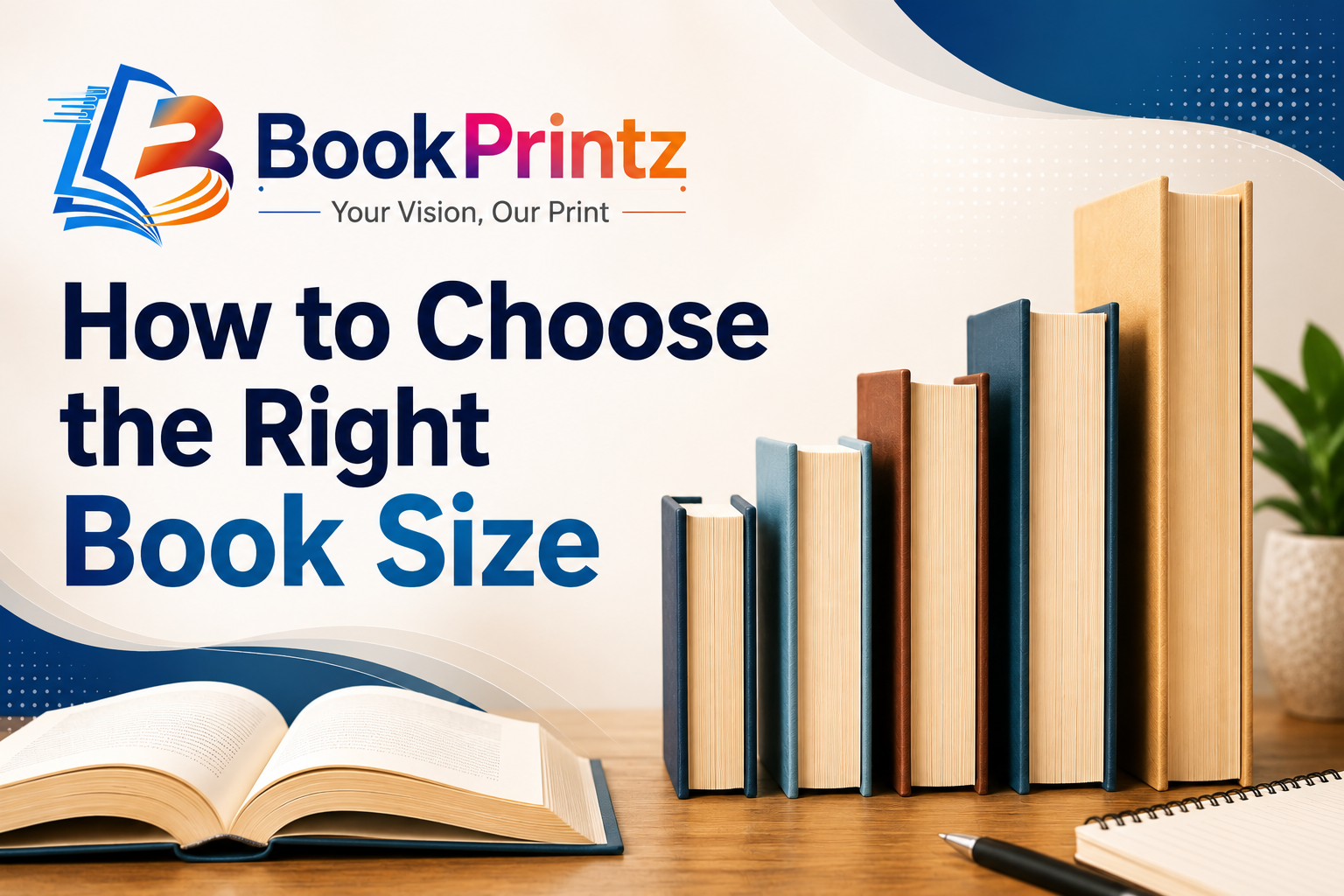
Choosing the right book size (trim size) is an important step in publishing. It influences how your book looks, feels, reads, and even how much it costs to print.
📚 Consider the Type of Book
Different books work better in different sizes. Novels usually suit compact formats, while textbooks, academic books, manuals, and illustrated books may require larger pages.
📏 Common Book Sizes
- 5.5 × 8.5 inches – Novels, poetry, and general reading
- 6 × 9 inches – Academic books, nonfiction, and professional titles
- A5 (148 × 210 mm) – Guides, educational books, and compact publications
- B5 (176 × 250 mm) – Textbooks, reference books, and academic publications
- A4 (210 × 297 mm) – Workbooks, manuals, reports, and books with large tables or illustrations
💰 Think About Printing Cost
Larger books generally require more paper and may increase production costs. However, selecting a suitable larger format can sometimes reduce the total page count. The final cost depends on page count, paper, binding, print quantity, and printing method.
👁️ Focus on Readability
The page should provide enough space for comfortable font sizes, margins, headings, images, tables, and illustrations. Avoid choosing a size simply because it looks attractive.
📖 Consider Binding and Page Count
The number of pages affects the thickness of the book and its spine. Your chosen size should work well with the intended binding method, such as perfect binding, hardcover, or saddle stitching.
✅ Make the Right Choice
There is no single perfect size for every book. The best book size is one that balances content, readability, appearance, printing cost, and reader expectations.
The right book size doesn’t just hold your content—it improves the entire reading experience.