Digital Printing vs Offset Printing: Which Is Best for Books?
When you are ready to print a book, one important decision is choosing the right printing method. The two most common options are digital printing and offset printing.
Both methods can produce professional-quality books, but they are suitable for different quantities, budgets, and publishing needs. Understanding the difference can help authors and publishers choose the right option.
For authors who need only a limited number of copies, short-run book printing can also be a practical and cost-effective choice.
What Is Digital Printing?
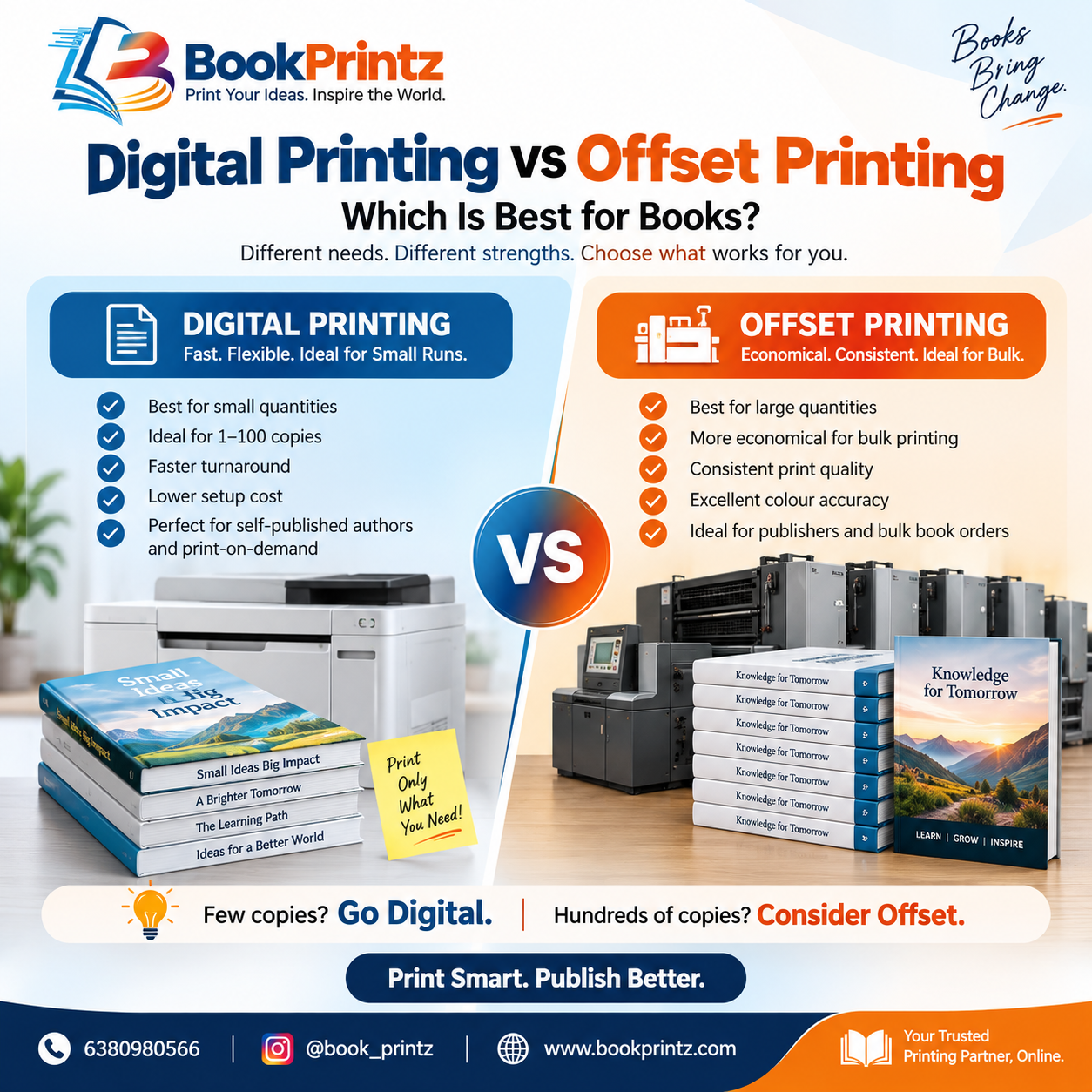
Digital printing prints your book directly from a digital file without creating printing plates. This makes the setup process simple and quick.
Digital printing is especially suitable for authors who want to print a small number of books.
Benefits of Digital Printing
- Suitable for small print quantities
- Lower initial setup cost
- Faster printing process
- Easy to print additional copies
- Ideal for self-publishing
- Suitable for print-on-demand and short-run printing
For example, if you need only a few copies for personal distribution, review, promotion, or an initial book launch, digital printing can be a practical choice.
What Is Offset Printing?
Offset printing is a traditional printing method that uses printing plates to transfer the content onto paper.
It requires more preparation before printing begins. However, when a large number of copies are required, offset printing can become more economical per copy.
Benefits of Offset Printing
- Suitable for large print quantities
- Lower cost per copy for bulk printing
- Consistent print quality
- Good control over colours
- Suitable for large publishing projects
Publishers planning to distribute hundreds or thousands of copies may prefer offset printing.
Digital Printing vs Offset Printing
The main difference is the quantity of books you want to print.
Digital printing is generally better for smaller quantities because there is less setup involved. Authors can print only the number of copies they currently need.
Offset printing involves a higher initial setup process but becomes more cost-effective when the printing quantity increases.
Another important factor is turnaround time. Digital printing can usually be started quickly once the print-ready file is available. Offset printing requires additional preparation before production.
Which Is Best for Self-Published Authors?
For many new and self-published authors, digital book printing can be a convenient option.
You do not have to invest in hundreds of copies before knowing the demand for your book. You can start with a smaller quantity and print additional copies when required.
This can help reduce unnecessary printing expenses and avoid storing unsold books.
Which Is Best for Bulk Book Printing?
If you already have confirmed demand for hundreds or thousands of copies, offset printing may offer better value.
Educational institutions, established publishers, organisations, and authors with confirmed bulk orders can consider offset printing.
Before choosing, compare the total production cost rather than looking only at the cost per copy.
Factors to Consider Before Choosing
Before selecting digital or offset printing, consider:
- Number of copies required
- Available printing budget
- Required delivery time
- Book size and page count
- Colour or black-and-white printing
- Paper quality
- Binding requirements
- Expected future demand
The right printing method depends on your individual publishing requirements.
Final Thoughts
There is no single printing method that is best for every book.
Digital printing is a practical choice for smaller quantities, short runs, and self-publishing projects. Offset printing is generally more suitable when you need a large number of copies and want to reduce the cost per copy.
Choosing the right method can help you control your publishing budget while getting the quantity and quality your book requires.
At BookPrintz, we help authors turn manuscripts into professionally printed books with printing options suited to different publishing requirements.
Print the quantity you need. Publish with confidence.